 EN
EN

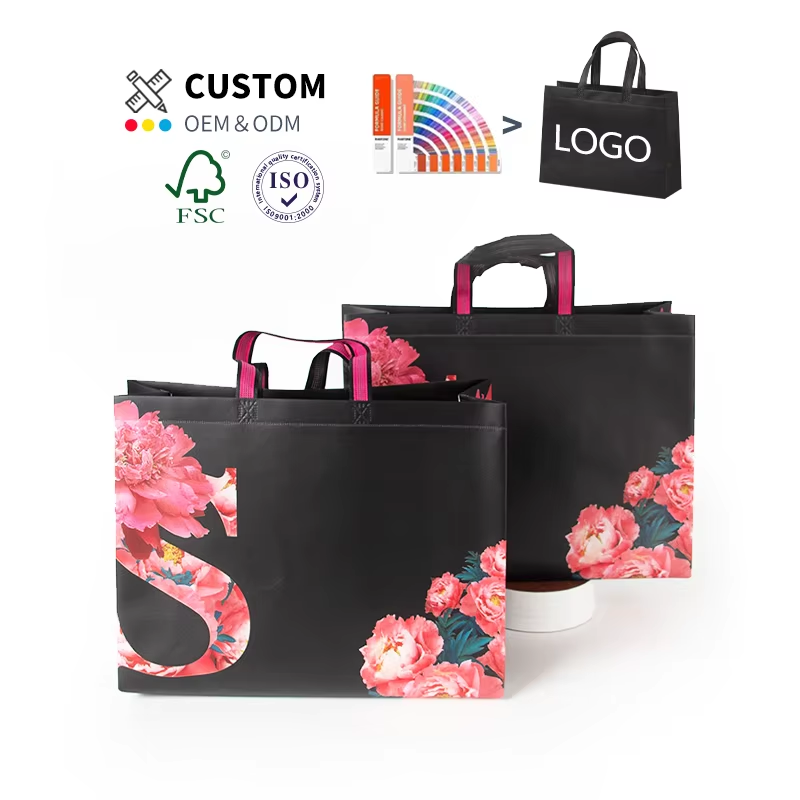
In a world where sustainability and practicality must walk hand in hand, the non woven shopping bag has emerged as one of the most compelling alternatives to single-use plastic. Retailers, brands, and everyday consumers are increasingly turning to this versatile carrier not just for environmental reasons, but because it genuinely delivers on performance, branding potential, and long-term cost efficiency. Understanding what sets this type of bag apart requires a closer look at its material properties, real-world applications, and the measurable value it brings to everyone in the supply chain.
The non woven shopping bag is no longer a niche product reserved for health food stores or eco-conscious boutiques. It has become a mainstream packaging and promotional tool across industries ranging from grocery retail and fashion to healthcare and corporate gifting. As demand for reusable, durable, and customizable carry solutions continues to grow, exploring the full range of advantages this bag offers becomes essential for any business or buyer making informed procurement decisions.
Material Composition and Structural Advantages
What Makes Non Woven Fabric Unique
The defining characteristic of a non woven shopping bag lies in its fabric construction. Unlike woven textiles, non woven fabric is produced by bonding or felting fibers together through mechanical, thermal, or chemical processes rather than weaving or knitting them. The result is a flat, porous sheet that exhibits properties tailored to specific applications. Polypropylene (PP) is the most commonly used base material, prized for its combination of light weight, tensile strength, and resistance to moisture.
This bonded fiber structure gives the non woven shopping bag a surprisingly high load-bearing capacity relative to its own weight. The interlocked fibers distribute stress across a wider surface area, reducing the risk of tearing at stress points such as handle junctions. This is a critical advantage over thin plastic bags, which are prone to puncture and tear under moderate loads. For grocery and retail use, where bags routinely carry heavy or irregularly shaped items, this structural resilience is a tangible functional benefit.
Additionally, the breathable nature of non woven fabric helps prevent moisture buildup inside the bag, which is especially useful when carrying fresh produce, packaged foods, or items sensitive to condensation. The material does not trap odors as readily as sealed plastic, making the non woven shopping bag a more hygienic long-term carrying option.
Durability and Reusability in Practical Use
One of the most frequently cited advantages of the non woven shopping bag is its reusability. A well-manufactured non woven bag can withstand dozens to hundreds of uses before showing meaningful wear, depending on the fabric weight (measured in grams per square meter, or GSM) and construction quality. Higher GSM non woven bags, typically in the 80–120 GSM range, are noticeably more robust and suitable for heavy-duty retail or industrial applications.
Reusability translates directly into reduced waste generation. When a consumer replaces even a fraction of their weekly single-use plastic bag consumption with a single non woven shopping bag, the cumulative reduction in plastic waste is significant over months and years. For businesses, offering reusable bags also reduces reliance on continual restocking of disposable packaging, which has implications for both logistics costs and sustainability reporting.
The material is also relatively easy to clean. Most non woven bags can be wiped down or gently hand-washed, restoring them to presentable condition without damage to the fabric or printed graphics. This maintenance simplicity supports extended product life cycles and keeps branding looking sharp throughout the bag's active lifespan.
Environmental and Sustainability Advantages
Reduced Environmental Footprint Compared to Plastic
The environmental case for the non woven shopping bag is built on a comparison of full lifecycle impacts. Conventional single-use plastic bags are lightweight and cheap to produce, but their end-of-life outcomes are deeply problematic. They frequently escape waste management systems, accumulating in waterways, marine environments, and terrestrial ecosystems. Non woven polypropylene bags, by contrast, are designed for repeated use, which means fewer total units are produced and discarded over a given period.
When the reuse rate is factored into lifecycle assessments, a non woven shopping bag used consistently over time demonstrates a substantially lower per-use environmental cost than single-use alternatives. The energy and raw material inputs are amortized across each use, improving its environmental profile with every additional trip to the store or market. For businesses tracking environmental, social, and governance (ESG) metrics, this shift in packaging strategy contributes meaningfully to carbon and waste reduction goals.
Polypropylene is also a recyclable thermoplastic, which means end-of-life non woven shopping bag materials can in principle be recovered and reprocessed, provided appropriate infrastructure exists. While consumer-level recycling access varies by region, the recyclability of the base material is a structural environmental advantage over composite or multi-layer plastic packaging that is inherently difficult to recycle.
Supporting Circular Economy Objectives
Brands and retailers operating within circular economy frameworks are increasingly looking for packaging solutions that extend product lifespans, minimize virgin material consumption, and facilitate material recovery. The non woven shopping bag aligns well with these objectives. Its durability extends the functional lifespan of the product. Its material composition supports recovery pathways. And its reusability model inherently reduces the volume of new units required to serve a given customer base over time.
For businesses participating in extended producer responsibility (EPR) programs or voluntary sustainability pledges, transitioning away from single-use plastic bags toward reusable non woven shopping bag solutions can serve as a visible and verifiable action. This carries reputational value with environmentally aware consumers and may also provide regulatory compliance benefits in jurisdictions where single-use plastic restrictions are in force or being introduced.
Branding and Customization Advantages
Print Quality and Visual Impact
From a marketing perspective, the non woven shopping bag is a highly effective brand communication tool. The flat, relatively smooth surface of non woven fabric accepts a wide range of printing techniques, including screen printing, heat transfer printing, and full-color CMYK offset printing. This makes it possible to reproduce logos, taglines, product imagery, and promotional messaging with strong visual fidelity.
A non woven shopping bag carrying a well-designed brand graphic functions as a walking advertisement each time it is used in public. Unlike a paper bag that deteriorates after a single outing or a plastic bag that is quickly discarded, a high-quality non woven bag circulates repeatedly through public spaces, extending brand impressions at no additional media cost. For retailers with strong visual identities, this represents a low-cost, high-frequency brand exposure opportunity.
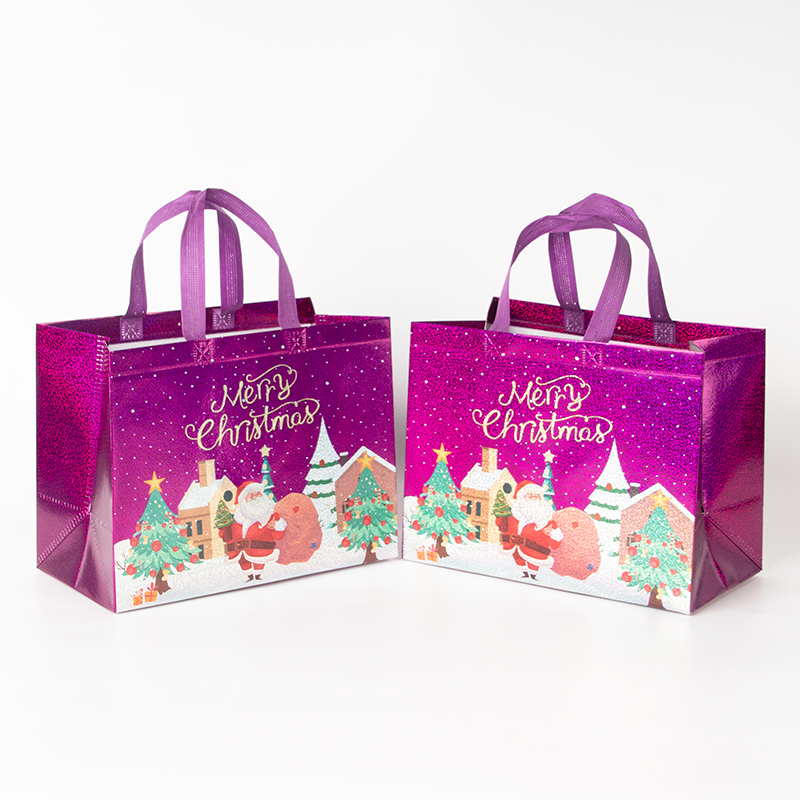
The ability to print across large surface areas — including gussets, handles, and interior linings — gives designers and brand managers significant creative latitude. Custom colors, patterns, and seasonal graphics can all be applied to differentiate a brand's non woven shopping bag from competitors and create memorable unboxing or in-store experiences.
Customization for Diverse Applications
Beyond graphics, the physical configuration of a non woven shopping bag can be customized extensively to match specific use cases. Size, handle length, handle type (loop handles, flat handles, rope handles), gusset depth, and bottom reinforcement are all variables that manufacturers can adjust to meet specific load requirements or aesthetic preferences. This flexibility makes non woven bags suitable not only for grocery shopping but also for trade shows, gift packaging, fashion retail, and corporate promotional campaigns.
Lamination options add another layer of customization. Laminated non woven bags feature a thin bonded film layer over the fabric surface, which enhances color vibrancy, improves moisture resistance, and creates a more premium tactile experience. This option is popular in fashion retail and high-end promotional contexts where the perceived value of the bag reflects on the brand itself.
For B2B buyers placing large custom orders, the cost per unit of a non woven shopping bag is typically competitive compared to comparable paper or woven alternatives, especially when print complexity and volume discounts are factored in. The combination of low per-unit cost and high perceived value makes it an attractive choice for businesses seeking to maximize return on their packaging investment.
Cost-Effectiveness and Supply Chain Advantages
Long-Term Cost Efficiency
While the upfront unit cost of a non woven shopping bag is higher than that of a single-use plastic bag, the long-term cost equation shifts decisively in its favor when reuse is taken into account. A business that provides customers with a durable reusable bag can benefit from reduced restocking frequency, as fewer total units are needed to serve the same customer base over time. In retail environments with loyalty programs or deposit schemes, the economics become even more favorable.
For promotional or event applications, the non woven shopping bag offers a lower cost per impression than many other branded giveaway items. Because the bag continues to be used after the initial event, it generates ongoing brand visibility without additional expenditure. This makes it a particularly efficient investment for trade show participation, product launches, and seasonal campaigns where sustained brand recall is the objective.
Lightweight Logistics and Storage Benefits
From a logistics and warehousing perspective, the lightweight nature of the non woven shopping bag translates into lower shipping costs and more efficient storage. Non woven bags can be folded flat or stacked compactly, allowing large quantities to be transported and stored without excessive space or weight penalties. This is a meaningful operational advantage for retailers and distributors managing high inventory volumes.
The material's resistance to humidity and mild temperature fluctuations also reduces the risk of damage during transit and storage compared to paper-based alternatives, which are vulnerable to moisture degradation. A non woven shopping bag arriving at its destination in pristine condition ensures that brand graphics and structural integrity are maintained from manufacturer to end user, reducing waste from damaged stock.
For businesses sourcing internationally, the compact packing dimensions of non woven bags mean that higher quantities can be shipped per container, improving freight utilization and reducing the per-unit landed cost. This logistical efficiency is an often-overlooked advantage that contributes to the overall cost competitiveness of the non woven shopping bag at scale.
FAQ
How many times can a non woven shopping bag typically be reused?
The reuse lifespan of a non woven shopping bag depends on the fabric weight and construction quality. Bags made from 80 GSM or higher polypropylene non woven fabric can typically withstand 50 to 100 or more uses under normal conditions. Proper care, including gentle cleaning and avoiding overloading, further extends the functional life of the bag.
Is a non woven shopping bag suitable for heavy grocery loads?
Yes. A well-constructed non woven shopping bag with reinforced handles and a high GSM fabric weight is capable of carrying significant loads safely. Many standard non woven grocery bags are designed to hold 10 to 15 kilograms or more, making them practical for full grocery runs. Buyers should verify the GSM and handle construction when selecting bags for heavy-duty retail use.
Can the printing on a non woven shopping bag withstand repeated use and washing?
Print durability on a non woven shopping bag depends on the printing method and any protective coating applied. Screen-printed and heat-transfer graphics generally hold up well under light cleaning and repeated handling. Laminated bags provide the highest level of print protection, as the film layer shields graphics from abrasion and moisture. Harsh machine washing is not recommended, as it can degrade both the fabric and the print over time.
What industries benefit most from using non woven shopping bags?
The non woven shopping bag is widely used across grocery retail, fashion and apparel, healthcare, corporate promotions, trade shows, and food service industries. Any sector that requires durable, cost-effective, and brandable carry solutions can benefit from adopting non woven bags. Their versatility in size, configuration, and print options makes them adaptable to a broad range of commercial and promotional contexts.