
 EN
EN


In today's competitive retail environment, packaging is no longer an afterthought — it is a powerful brand statement delivered directly into the hands of your customers. White paper gift bags have emerged as one of the most versatile and commercially valuable packaging solutions available to retailers across virtually every product category. Whether you operate a boutique jewelry store, a fashion clothing label, or a premium lifestyle brand, the choice of packaging communicates your brand values before a single word is spoken. Retailers who invest in high-quality white paper gift bags consistently report stronger customer perception, increased gift-giving appeal, and improved brand recall at the point of unboxing.
This article explores the full scope of what white paper gift bags offer retailers — from their structural and aesthetic characteristics to their practical application across different product segments. Understanding the nuances of this packaging format will help buying managers, brand owners, and retail operators make more informed decisions about how to elevate their customer experience and reinforce brand positioning through smarter packaging choices. The growing demand for customized white paper gift bags reflects a broader shift in how consumers perceive value and presentation in modern retail.
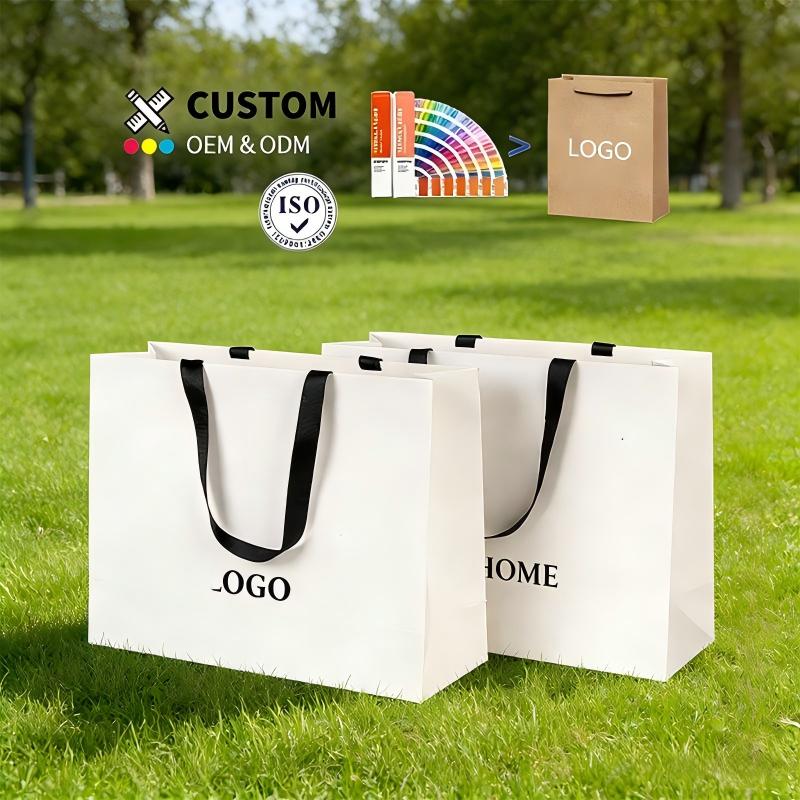
The Retail Appeal of White Paper Gift Bags
Why White Works as a Retail Packaging Color
White is not simply the absence of color — in retail packaging design, it is a deliberate statement of clarity, luxury, and versatility. White paper gift bags serve as a blank canvas that allows your brand's logo, typography, and graphic elements to stand out with maximum visual impact. Unlike darker or more complex background colors, white creates a sense of cleanliness and premium quality that resonates strongly with consumers across demographics.
From a practical standpoint, white also offers the widest compatibility with printing techniques. Whether you choose foil stamping, embossing, offset printing, or UV spot coating, the results on a white surface are consistently vivid and precise. This makes white paper gift bags the preferred choice for retailers who want their branding to look polished and consistent across all customer touchpoints.
Additionally, white packaging carries universal associations with celebration, gifting, and special occasions. Customers receiving purchases in well-crafted white paper gift bags are more likely to perceive the transaction as a premium experience, which supports higher price positioning and encourages repeat purchasing behavior.
Consumer Psychology and the Unboxing Experience
Modern consumers, particularly those who shop in premium and mid-to-high-end retail environments, have come to expect a thoughtful packaging experience. The moment a customer receives a white paper gift bag with clean handles, structured sides, and a printed logo, they immediately begin forming emotional associations with the brand. This psychological trigger — often referred to as the unboxing effect — plays a measurable role in how customers evaluate their purchase satisfaction.
Research consistently shows that packaging quality influences a consumer's willingness to recommend a brand to others. White paper gift bags that are well-constructed and visually refined signal that the brand behind them takes quality seriously at every level, not just in the product itself. This brand credibility is especially important in categories like jewelry, cosmetics, apparel, and artisan goods where the product's perceived value is closely tied to its presentation.
Retailers who underestimate the importance of bag quality often lose out on organic social sharing opportunities. When customers receive purchases in striking white paper gift bags, they are far more inclined to photograph and share the experience on social media, providing retailers with valuable word-of-mouth exposure at zero additional marketing cost.
Structural Features That Define Quality White Paper Gift Bags
Paper Weight, Coating, and Construction Integrity
Not all white paper gift bags are created equal, and retailers who source these products at scale need to evaluate several technical specifications before committing to a supplier or design. Paper weight is one of the most critical factors — bags intended for heavier products such as bottled goods, boxed items, or multiple garments require a significantly higher GSM (grams per square meter) rating than those used for lightweight accessories or small gifts.
Surface coating also plays a major role in both aesthetics and durability. Matte-coated white paper gift bags provide a sophisticated, soft-touch finish that pairs particularly well with embossed or foil-stamped branding. Gloss-coated versions deliver a brighter, more vibrant appearance that can make printed graphics and photography-based artwork pop with intensity. The choice between these two finishes should be guided by the overall aesthetic direction of the retail brand.
Structural integrity depends on the quality of the board used, the precision of the folding and gluing process, and the strength of the handle attachment. Twisted paper rope handles, flat ribbon handles, and die-cut handles all serve different functional and aesthetic purposes. Retailers offering premium or luxury products typically favor ribbon handles, as these lend white paper gift bags a distinctly upscale appearance that aligns with high-end customer expectations.
Size Variations and Category Fit
One of the practical advantages of white paper gift bags is the breadth of size options available to retailers. From small boutique-style bags designed to carry a single jewelry item or folded scarf, to large format bags capable of accommodating multiple clothing items or bulky boxed merchandise, the format scales naturally across product categories.
Jewelry retailers typically favor compact, deep-structured white paper gift bags that accommodate small boxes or pouches while maintaining a sense of occasion. Clothing and apparel retailers tend toward wider, flat-bottomed designs that can hold folded garments without creasing. Home goods and lifestyle retailers may require custom-sized solutions that fall outside standard dimensions, which is where the flexibility of custom manufacturing becomes particularly valuable.
Matching bag size to product category is not merely about physical fit — it is about proportionality and presentation. A large product in an undersized bag looks careless, while a small product rattling inside an oversized bag feels underwhelming. Getting the dimensions right is a foundational step in creating a cohesive brand packaging experience with white paper gift bags.
Customization Strategies for Retail Branding
Logo Printing Techniques and Visual Identity
Custom printing is where white paper gift bags transition from a functional container to a brand communication tool. Retailers have several printing techniques at their disposal, and the right choice depends on budget, order volume, and the complexity of the brand design. For high-volume runs with detailed multi-color artwork, offset printing delivers exceptional consistency and color accuracy across large batches.
For brands with a more minimal aesthetic — perhaps just a monogram, wordmark, or single-color logo — techniques like hot foil stamping or blind embossing can create an extraordinarily refined result on white paper gift bags without the need for full-color printing. These specialty finishes add tactile dimension to the packaging, encouraging customers to engage with and appreciate the bag as an object of craftsmanship rather than simply a carrier.
UV spot coating is another popular option that allows specific design elements to be highlighted with a glossy layer while the rest of the bag retains a matte finish. This contrast creates a visually dynamic effect that can make brand logos or graphic motifs appear to jump off the surface of white paper gift bags, creating a memorable first impression that reinforces brand identity at the retail counter.
Seasonal and Campaign-Specific Customization
One of the most strategically important applications of white paper gift bags is their adaptability for seasonal campaigns. Retailers can leverage the neutral white base to create holiday-specific designs, anniversary editions, or limited-run promotional bags that feel special and timely without requiring a complete overhaul of the packaging system. This agility allows retailers to maintain brand consistency while introducing moments of variety and excitement throughout the retail calendar.
Valentine's Day, Christmas, Chinese New Year, Mother's Day, and Back-to-School seasons all represent high-value sales periods where differentiated packaging can directly influence purchase decisions and gifting behavior. Customers shopping for gifts are highly responsive to packaging that already feels gift-ready, and a beautifully designed white paper gift bag with a seasonal motif effectively removes the need for additional wrapping — adding convenience while elevating perceived value.
Retailers who plan their white paper gift bags customization calendar in advance can negotiate better unit pricing through larger consolidated orders, while still maintaining the flexibility to introduce design variations across seasons. This approach balances cost efficiency with the creative freshness that keeps the brand experience engaging for returning customers.
Sourcing Considerations for Retail Buyers
Evaluating Supplier Capabilities and Minimum Order Quantities
When sourcing white paper gift bags for retail use, buyers need to evaluate supplier capabilities across several dimensions beyond just price per unit. The ability to provide pre-production samples, color-accurate proofs, and structural prototypes is essential for ensuring that the final product matches the approved design and meets the required quality standards before a full production run is committed to.
Minimum order quantities (MOQs) are a critical consideration, particularly for smaller retailers or those launching new product lines. Some manufacturers of white paper gift bags offer flexible MOQ structures that allow brands to start with smaller quantities while they test the market, scaling up as demand grows. Understanding this flexibility upfront can prevent retailers from overcommitting budget to packaging inventory before sales velocity is established.
Lead times for custom white paper gift bags typically range from two to five weeks depending on the complexity of the design, the printing technique selected, and the production volume. Retailers should factor this timeline into their procurement planning, particularly during peak seasons when supplier capacity may be constrained. Establishing a reliable long-term supplier relationship can provide access to priority production slots and more responsive service.
Sustainability and Material Responsibility
Sustainability has become a non-negotiable consideration for a growing segment of retail consumers, and packaging choices are under increasing scrutiny. Fortunately, white paper gift bags are inherently more environmentally friendly than plastic alternatives, and the industry has developed a range of certified sustainable options that allow retailers to meet both regulatory requirements and consumer expectations.
FSC-certified paper, recycled fiber content, water-based inks, and biodegradable coatings are all features that forward-thinking retailers should look for when specifying white paper gift bags. These attributes not only reduce environmental impact but also serve as compelling brand communication points — informing customers through on-bag messaging that the brand takes its sustainability commitments seriously.
Retailers who source white paper gift bags with verified sustainable credentials are positioning themselves ahead of tightening regulations in multiple markets, particularly in Europe and North America where extended producer responsibility (EPR) frameworks are placing greater accountability on brands for the end-of-life impact of their packaging materials.
Applications Across Retail Categories
Jewelry and Accessories Packaging
The jewelry and accessories sector is one of the highest-value application areas for premium white paper gift bags. Purchases in this category are almost always gift-motivated or self-indulgent in nature, meaning that presentation is deeply intertwined with perceived value. A finely crafted white paper gift bag bearing the jeweler's logo in gold foil communicates craftsmanship and exclusivity from the moment the customer takes possession of their purchase.
For jewelry retailers, the structural specifications of the bag are particularly important. The bag must be sized appropriately to hold a jewelry box or pouch without excessive movement, and the base must be reinforced to prevent the sharp edges of boxes from piercing through. White paper gift bags designed for jewelry applications typically feature a higher board weight and a more refined handle treatment to match the premium nature of the enclosed product.
Many jewelry retailers also choose to coordinate their white paper gift bags with other packaging elements such as tissue paper, ribbon, and gift cards to create a cohesive branded gifting kit. This layered approach to packaging transforms the handover of a purchase into a genuinely memorable brand ritual that customers associate with occasions of personal significance.
Apparel, Fashion, and Lifestyle Retail
Fashion and apparel retailers face a different set of packaging requirements, where the primary challenge is accommodating varying garment sizes while maintaining a consistent brand aesthetic. White paper gift bags in the fashion segment tend to be larger in format, wider in base width, and manufactured with heavier paper to support the weight of multiple folded garments or shoe boxes.
The branding on fashion-focused white paper gift bags often plays a more prominent role in the overall brand communication strategy. Flagship stores and boutique fashion retailers may opt for full-surface printing, bold typographic treatments, or signature graphic patterns that make the bag itself a recognizable brand icon on the street. When shoppers carry these bags through high-traffic retail environments, the bag functions as mobile advertising, reinforcing brand visibility in a highly cost-effective way.
Lifestyle retailers — those who sell a curated mix of home goods, gifts, stationery, and small electronics — benefit from the versatility of white paper gift bags because a single design can work across a wide product range. This simplifies the packaging procurement process while maintaining visual coherence across the brand's entire product offering, making it easier to manage inventory and reduce per-unit costs through consolidated ordering.
FAQ
What is the typical paper weight recommended for retail white paper gift bags?
For most retail applications, white paper gift bags are manufactured using paper weights between 150 GSM and 300 GSM. Lighter-weight options in the 150–200 GSM range are suitable for small accessories or light clothing items, while heavier weights of 250–300 GSM are recommended for products that require greater structural support, such as boxed goods, multiple garments, or bottled items. Your supplier should be able to guide you toward the appropriate specification based on your product weight and intended use case.
Can white paper gift bags be produced with eco-friendly materials?
Yes, white paper gift bags can absolutely be produced using environmentally responsible materials. Options include FSC-certified virgin paper, recycled paper content, soy-based or water-based inks, and biodegradable surface coatings. Retailers with sustainability commitments should specify these requirements clearly during the sourcing process and request relevant certifications from their packaging supplier to ensure compliance and authenticity.
How far in advance should retailers order custom white paper gift bags for peak seasons?
For custom-printed white paper gift bags, retailers should aim to place orders at least six to eight weeks before the required delivery date during peak seasons such as Christmas, Valentine's Day, and other major retail periods. Standard production lead times typically range from two to four weeks, but supplier capacity constraints during peak periods can extend timelines significantly. Building buffer time into your procurement planning ensures that your packaging arrives ready before your sales window opens.
Are there size standards for white paper gift bags, or are fully custom dimensions available?
Both standard and fully custom dimensions are widely available in the white paper gift bags market. Standard sizes are useful for retailers who need quick-turnaround solutions or smaller quantities, as they can be printed without requiring new structural tooling. Custom dimensions are ideal for brands with specific product requirements that standard sizes cannot accommodate. Custom sizing typically involves a small tooling or die-cut cost but offers complete control over proportions, handle placement, and structural design, making it the preferred option for established retailers with consistent packaging needs.
Table of Contents
- The Retail Appeal of White Paper Gift Bags
- Structural Features That Define Quality White Paper Gift Bags
- Customization Strategies for Retail Branding
- Sourcing Considerations for Retail Buyers
- Applications Across Retail Categories
-
FAQ
- What is the typical paper weight recommended for retail white paper gift bags?
- Can white paper gift bags be produced with eco-friendly materials?
- How far in advance should retailers order custom white paper gift bags for peak seasons?
- Are there size standards for white paper gift bags, or are fully custom dimensions available?